
Nakipari Church of Saint George
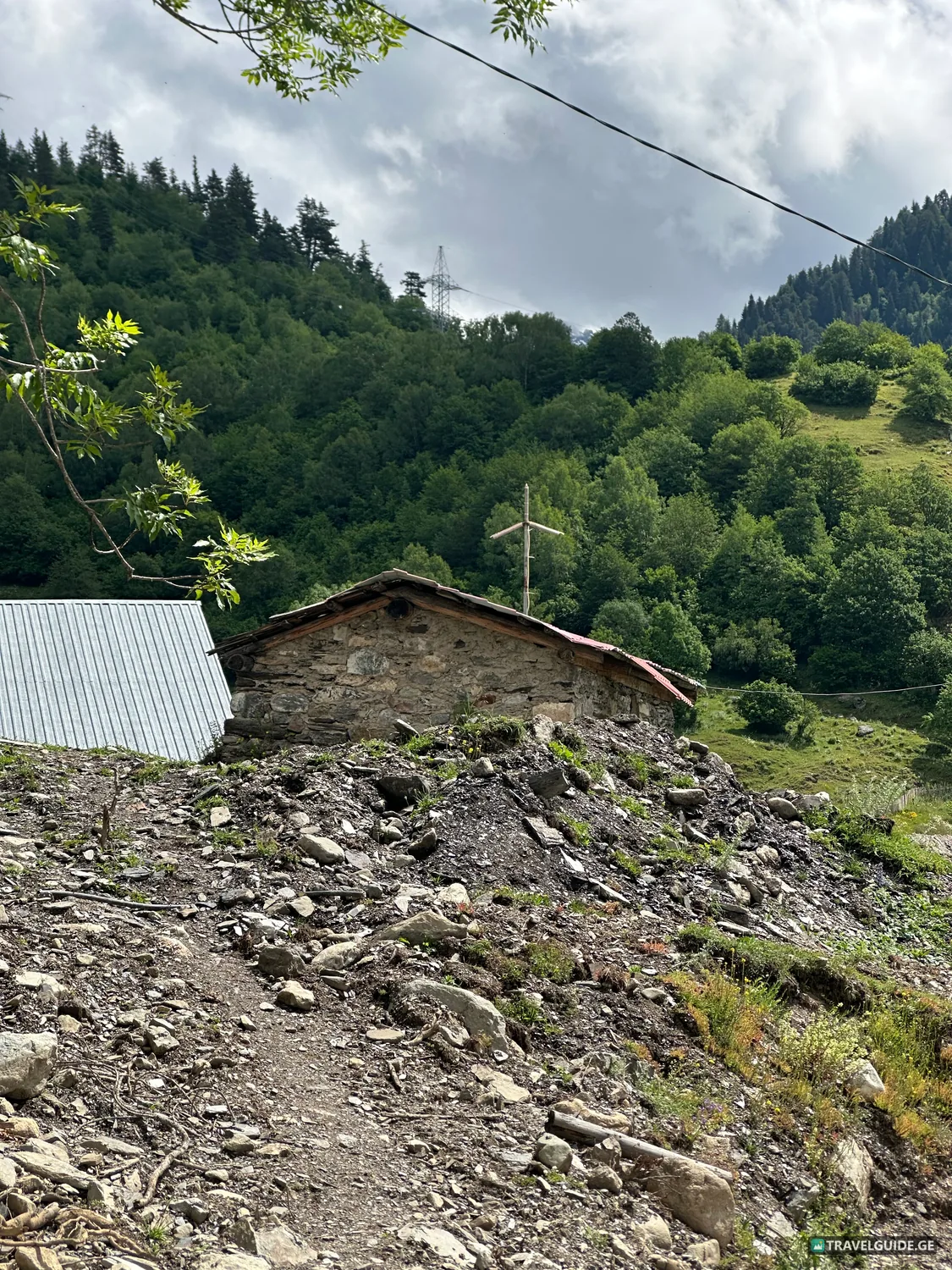
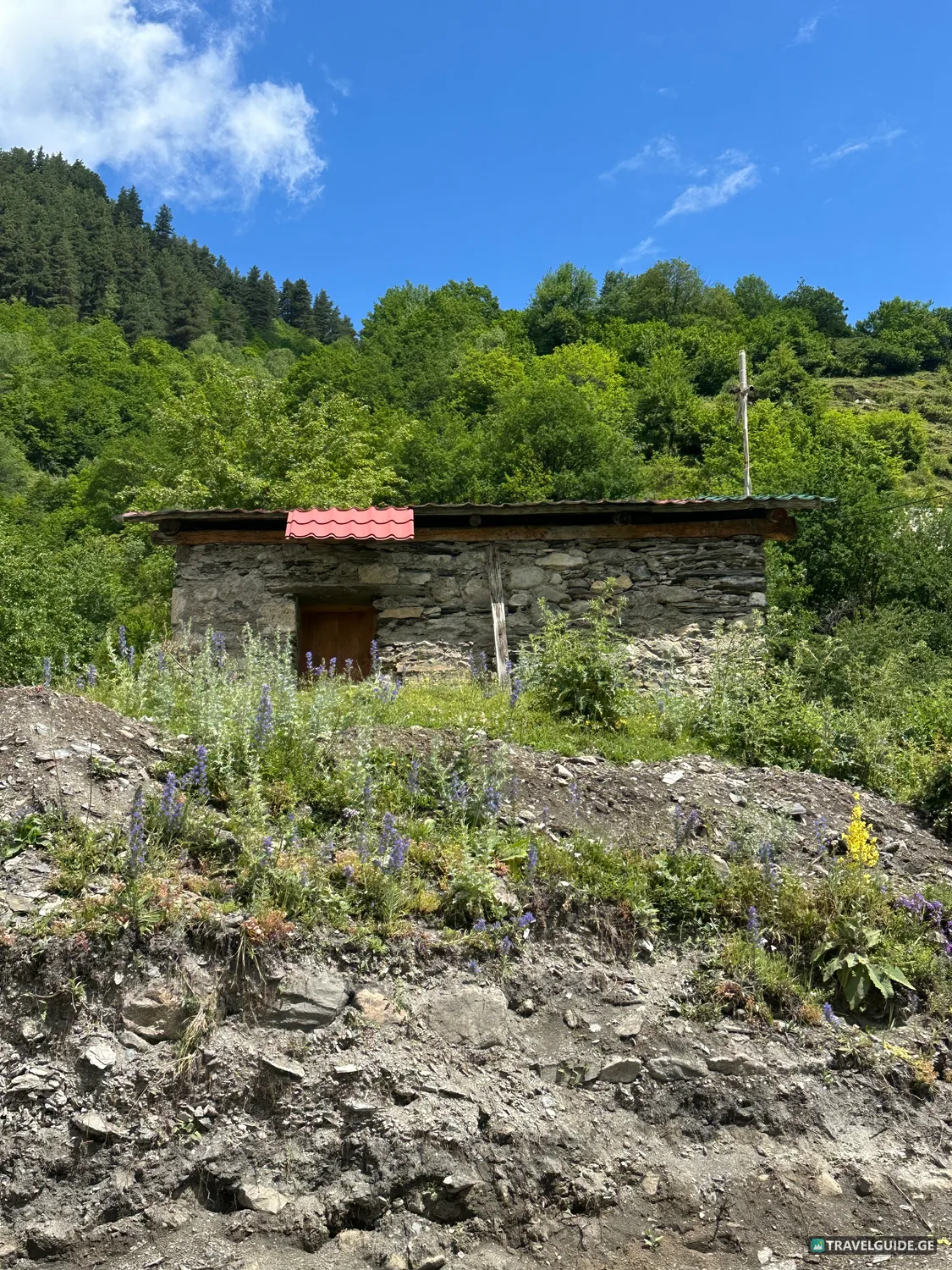
The Nakipari Church of Saint George, locally known as Jgrag, stands on a small hill in the high mountain village of Nakipari within the Upper Svaneti region. Constructed in the 10th century and later expanded, this modest limestone hall church holds monumental significance in Georgian cultural history. While its exterior architecture reflects the characteristic simplicity of early medieval highland chapels, the interior contains an incredibly well-preserved decorative cycle that marks a defining milestone in the evolution of medieval Georgian mural painting.
The Royal Murals of Tevdore
In 1130, the court painter Tevdore completely frescoed the interior walls of the church. Tevdore, who held the title of "painter of the king," is one of the very few medieval Georgian masters whose name is preserved through historical inscriptions. The stylistic execution at Nakipari represents a sophisticated shift away from rigid Byzantine formulas toward a localized, emotionally expressive artistic language.
Every square meter of the small hall is covered in vibrant iconography, using rich mineral pigments like deep blues, warm ochres, and natural earth tones that have resisted centuries of damp alpine weather. The artistic cycle includes a famous depiction of Saint George slaying the dragon, alongside solemn figures of local saints and biblical narratives. The expressive faces, dynamic body poses, and intricate drapery of the garments demonstrate the high level of cultural development achieved in these remote mountain valleys during the Golden Age of the Georgian Kingdom.
Architectural Features and Liturgical Art
Structurally, the building is a classic single-nave hall church built from roughly squared tuff and limestone blocks. Its facades are intentionally sparse, though the eastern exterior wall features rare decorative stone carvings, including a relief representation of a human face and a bull's head, which historians believe hint at pre-Christian regional motifs integrated into early medieval worship.
Inside, alongside the wall paintings, the church preserves a magnificent 11th-century silver processional cross. This masterpiece of Georgian repoussé art was commissioned by local elders and created by an artisan named Asan. The cross features detailed relief portraits of Saint George and scenes from his life, illustrating the complex metalworking traditions that thrived in the Caucasus mountains parallel to the fresco schools.