
Ananuri Fortress Complex
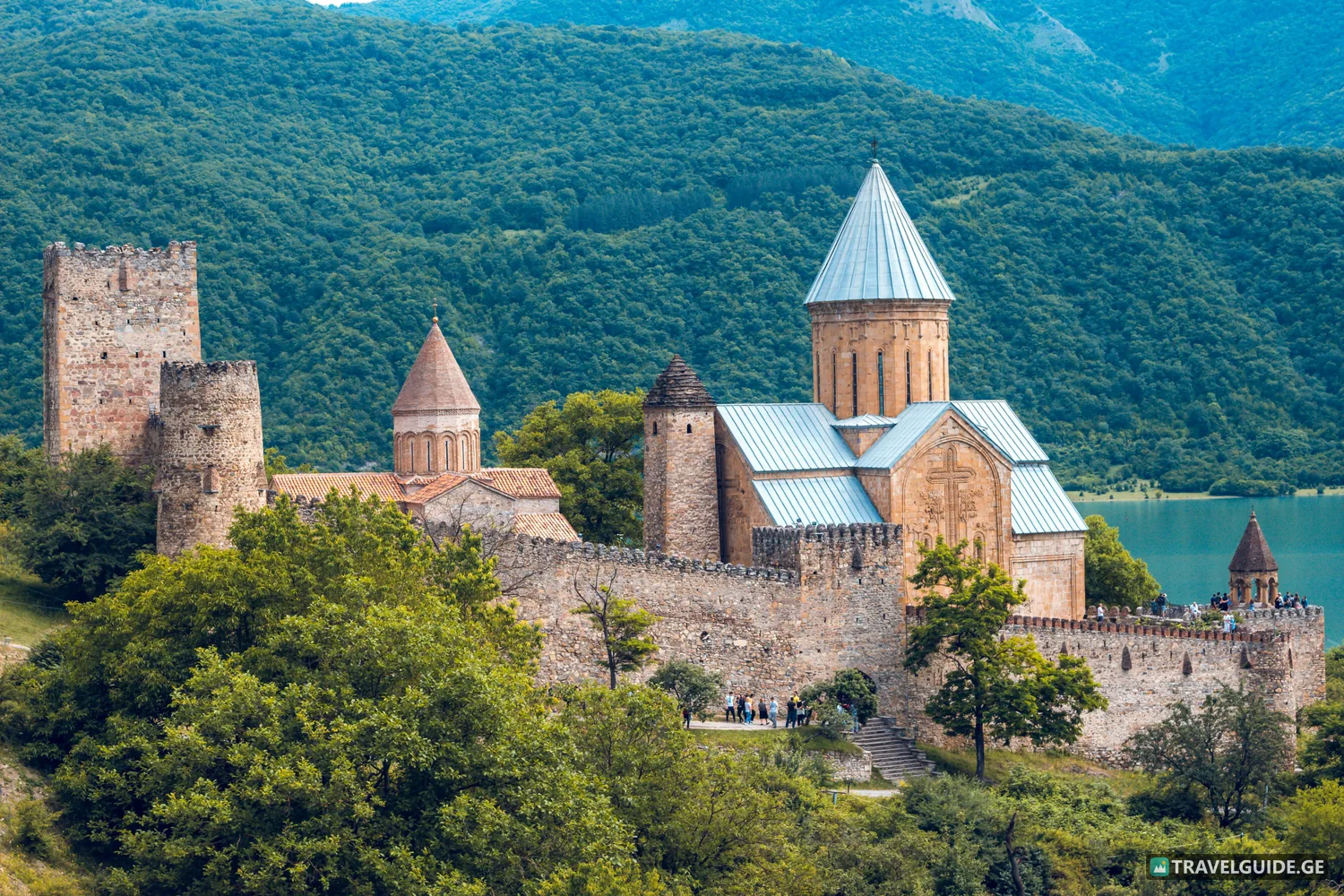
Running along the edge of the Aragvi River Valley, Ananuri commands one of the most prominent strategic positions in the Caucasus foothills. Perched directly above the sprawling waters of the Zhinvali Reservoir, this complex serves as an architectural landmark of late medieval Georgia. The site effortlessly balances military might with highly sophisticated ecclesiastical art, standing as a completely intact fortification system from an era when most regional strongholds fell into ruin. Beyond its remarkable structural preservation, the complex serves as a profound historical anchor for the Mtskheta-Mtianeti highland transition zones, capturing the dramatic power dynamics of the feudal Caucasus.
The Strategic Stronghold of the Aragvi Dynasties
From the 13th to the 18th centuries, the Dukes of Aragvi (Eristavis) ruled over these valleys with absolute authority. Their power base relied heavily on controlling the natural mountain corridors linking central Georgia with the North Caucasus. By creating a defensive bottleneck at Ananuri, the duchy levied taxes on regional trade networks, accumulated immense wealth, and sustained a private army capable of challenging even the Georgian monarchs.
This extreme concentrations of wealth and power inevitably bred deep blood feuds with neighboring feudal states. In 1739, the rival Duchy of Ksani mounted a massive, coordinated siege against the complex. The attackers breached the lower defenses and set fire to the inner fortifications, culminating in the violent demise of the ruling Aragvi line. The highest defensive tower, Sheupovari (The Stubborn), served as the final sanctuary for the remaining defenders who ultimately perished within its thick masonry walls. Following the massacre, the fortress shifted between imperial Russian garrisons and local royal administrations, retaining its military role well into the early 19th century.
Architecture and Cultural Signposts
The architectural layout features a multi-tiered defense network divided into an upper and lower enclosure. The upper fortress stands remarkably intact, anchored by a series of defensive towers, battlements, and two historic churches that trace the transition of local artistic styles.
- The Church of the Assumption (Ghvtismshobeli): Built in 1689, this grand structure is an exceptional example of late medieval Georgian architecture. The southern facade features a massive, deeply carved stone cross resting on stylized dragons, interwoven with grapevines and celestial imagery. This detailed stone-cutting showcases the peak of regional craftsmanship before Western influences altered traditional styles. Inside, fragmented frescoes remain on the walls, displaying biblical themes that survived a series of destructive historical fires.
- The Church of the Virgin (Ghvtaeba): Dating slightly earlier to the mid-17th century, this smaller brick and stone church is characterized by its direct structural attachment to an adjacent watchtower. Its design reflects a more urgent, defensive architecture built during periods of frequent cross-border incursions.
- The Sheupovari Tower: The tallest square fortification within the upper walls, this structure retains its defensive arrow slits, crenellations, and internal timber floor supports. Climbing the steep, narrow stone steps within the tower walls leads to the highest observation platform, offering a clear layout of the defensive layout and the surrounding river basin.