
Khergiani Tower
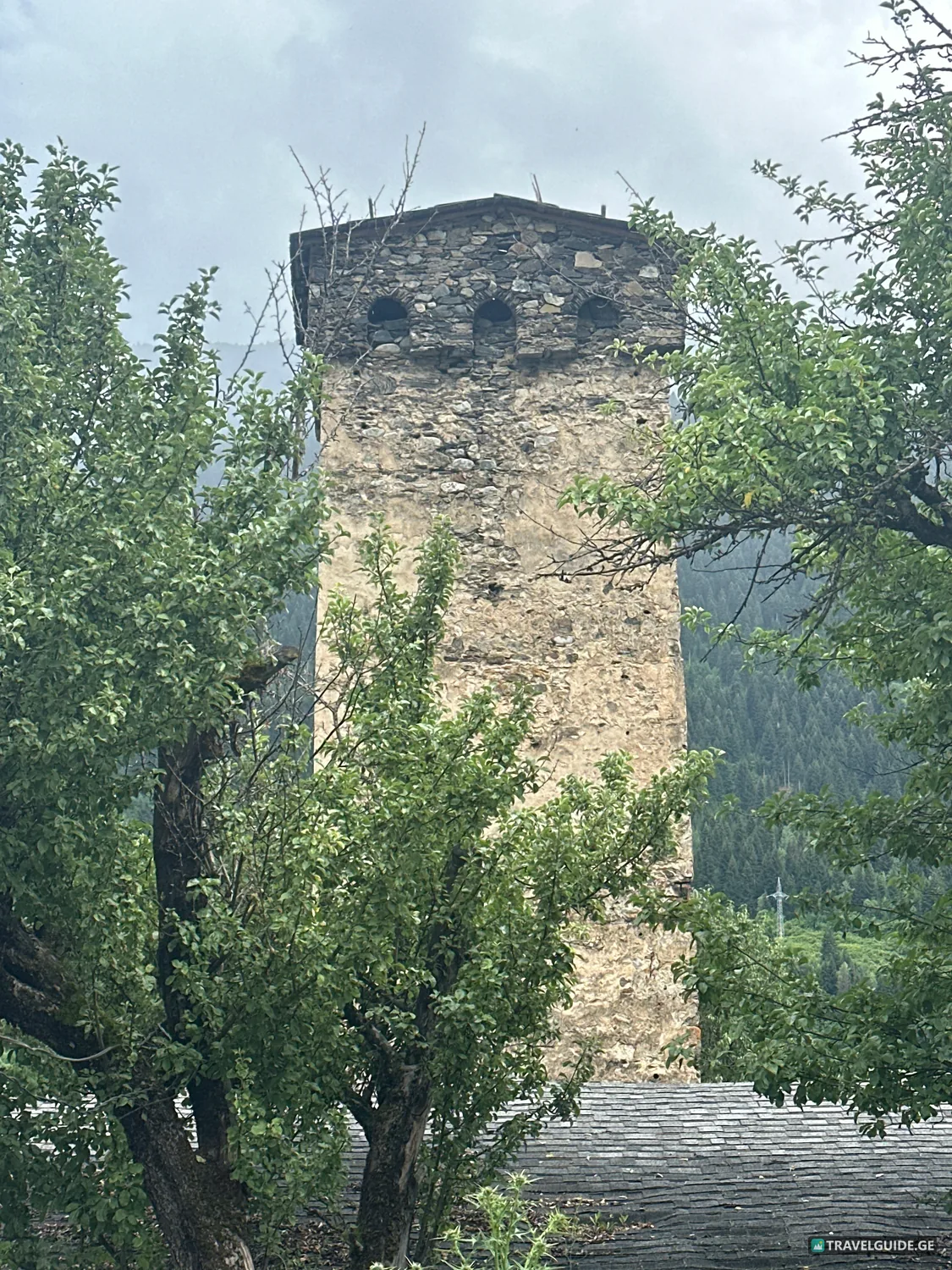
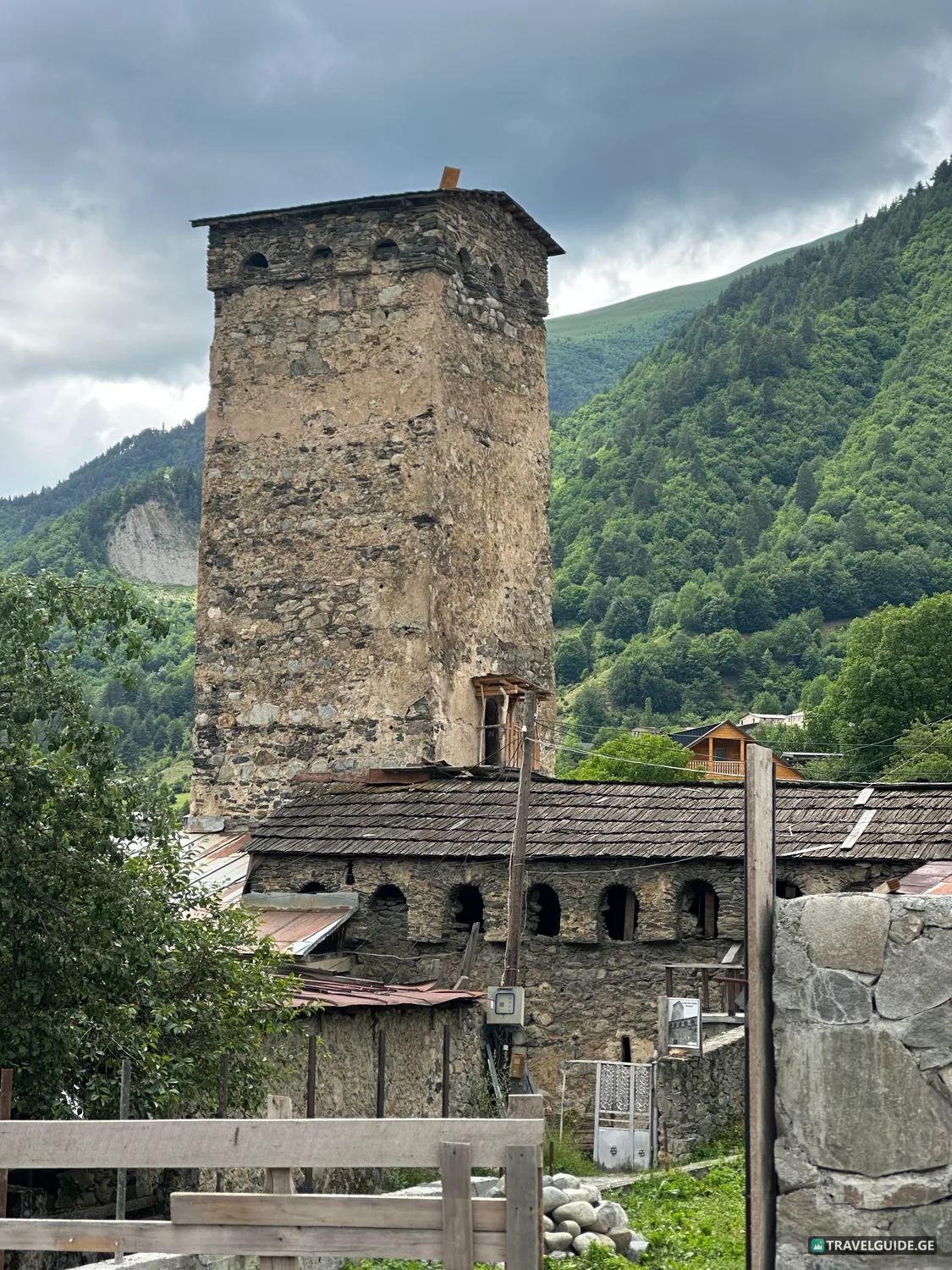
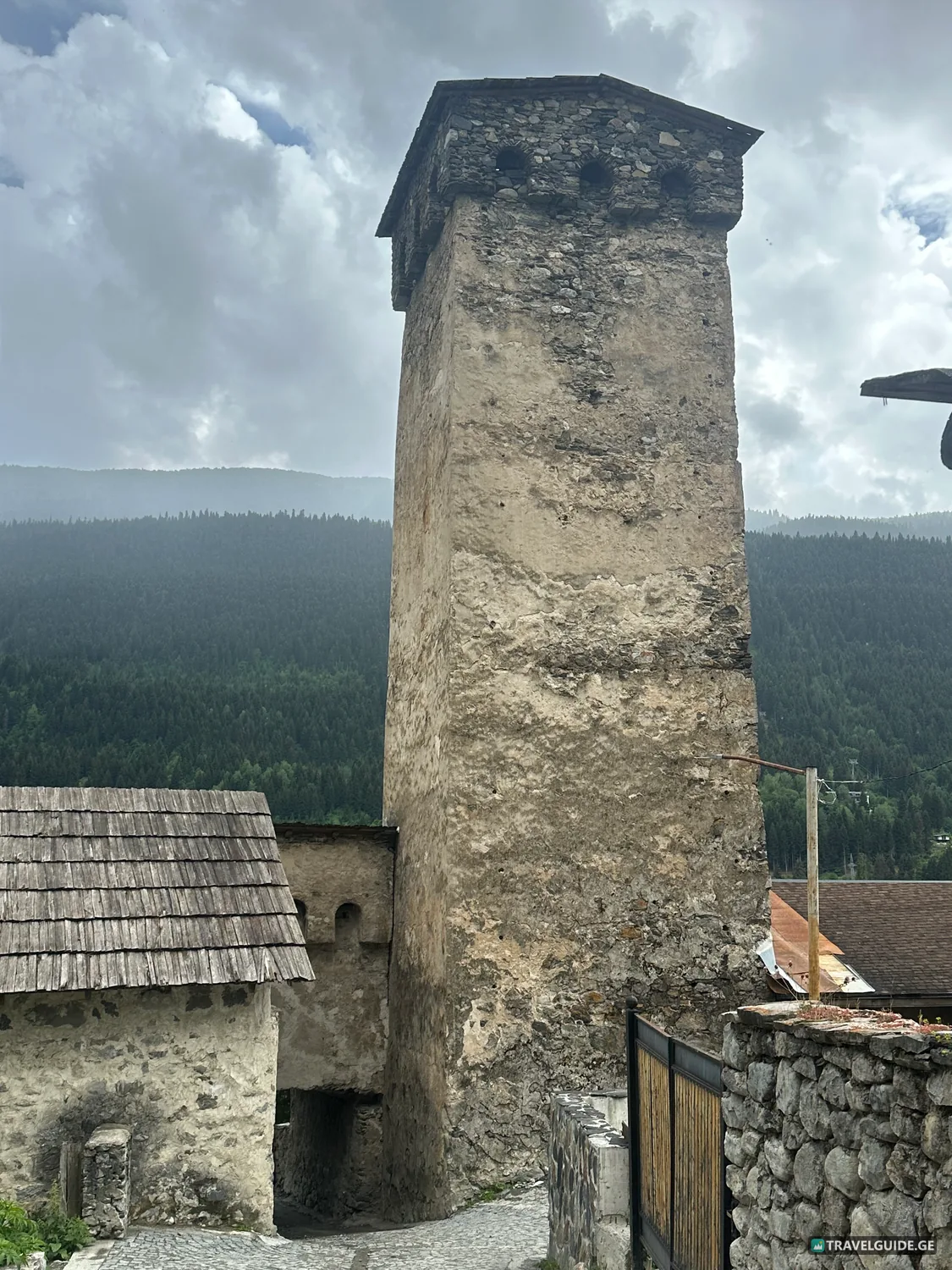
The Khergiani Tower in the Lanchvali neighborhood of Mestia stands as a primary example of the defensive architecture characteristic of the Upper Svaneti region. Rising abruptly from the mountain landscape, this stone structure is part of a broader defensive complex traditionally associated with the Khergiani family. Unlike many surrounding towers that serve as private property or historical shells, this structure offers a functional insight into the vertical living arrangements utilized by Svan families during periods of systemic instability and regional conflict in the Middle Ages.
Positioned adjacent to the Mikheil Khergiani House-Museum, the tower functions as both a historical monument and an architectural record. The geography of the site, centered in the heart of the Greater Caucasus, necessitates the heavy use of local schist and limestone, reflecting the geological composition of the surrounding river valleys. The tower's survival over centuries is linked to the structural integrity of its dry-stone masonry, a technique refined by generations of Svan master builders.
Evolution of Defensive Svan Architecture
The construction of towers in Svaneti was a response to both external threats and internal social dynamics, including the prevalence of blood feuds known as khevsuruli traditions. The Khergiani Tower follows the classic four-to-five-story plan: the ground level, or matskhvari, was historically reserved for livestock and food storage to maintain temperature control and security.
- Foundations: Built on thick, multi-layered stone bases to distribute the immense weight of the masonry.
- Masonry: Characterized by horizontal mortar-less stone courses, which allow the structure to flex during seismic activity, a common occurrence in the high mountains.
- Access: Historically accessed via retractable wooden ladders to ensure the safety of residents during potential breaches.
The Stratigraphy of Vertical Defense
The upper sections of the tower serve as the residential and defensive quarters. The transition from the lower storage levels to the upper living levels is marked by narrowing floor plates and decreasing wall thickness, which optimizes the tower's center of gravity. Each floor is interconnected by small hatchways, forcing a defensive posture that favored the inhabitants over any potential intruders.
Archaeological and architectural surveys of such towers reveal a highly specialized design:
- Machicolations: Small, exterior-facing apertures provided lines of sight and defensive firing ports for archers or musketeers, depending on the historical epoch.
- The Top Deck: The final level features an open or semi-covered platform, essential for surveillance of the valley floor and communication with neighboring defensive outposts via signal fires.
- Scaffolding Stones: External stone protrusions are not decorative; they are remnants of original wooden scaffolding used during the initial construction, later repurposed as emergency climbing aids.
Cultural Heritage and the Khergiani Legacy
While the tower represents the physical defensive history of the region, the adjacent association with Mikheil Khergiani links the site to the modern evolution of Svaneti. The architectural permanence of the tower contrasts with the ephemeral nature of the mountaineering feats performed by the region's people. This site remains a critical point for documenting the transition of Svan society from isolated, fortified clans to a central node of mountaineering culture in the Caucasus.