
Achkhoti Tower
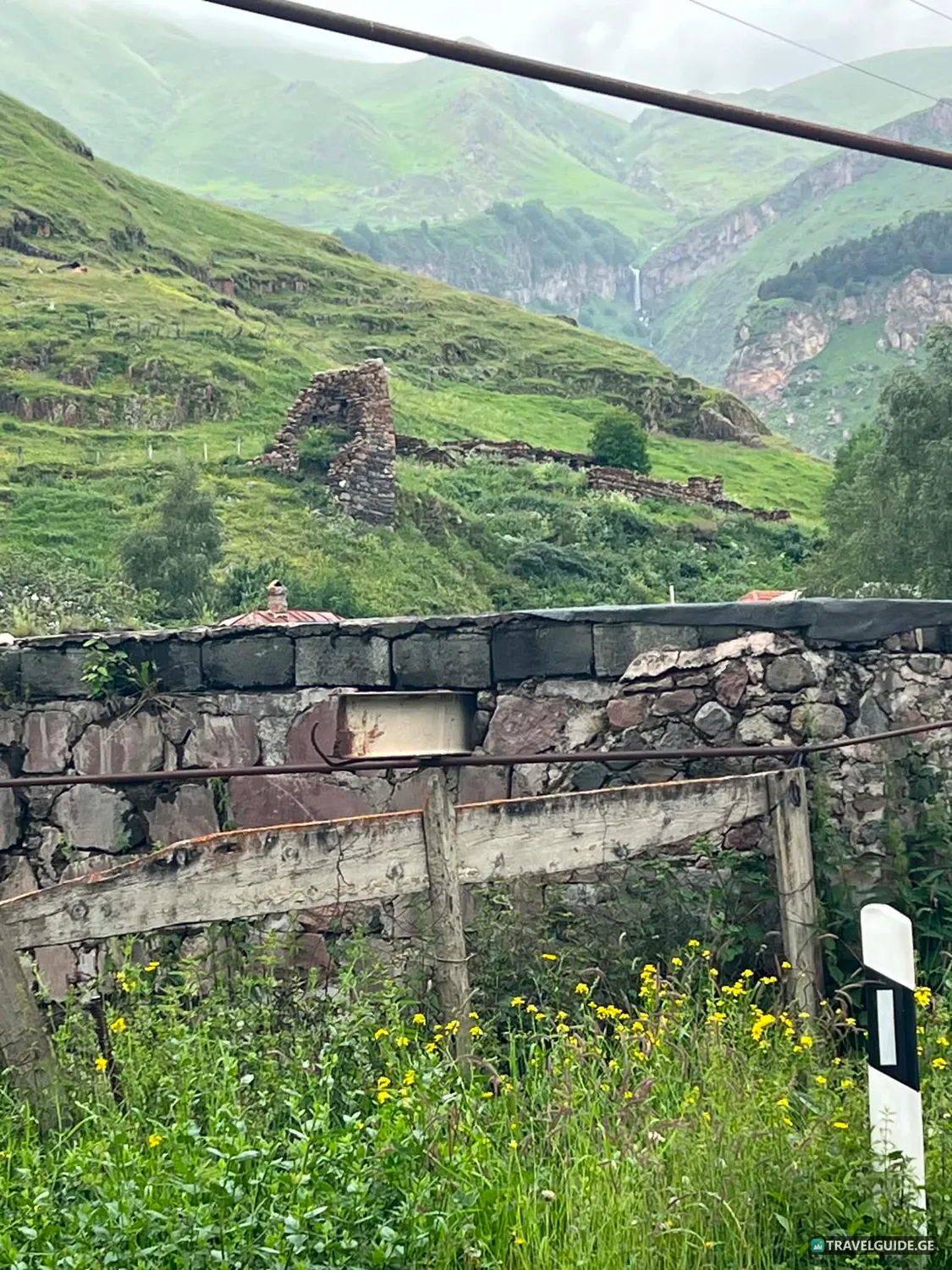
The Achkhoti Tower stands on the edge of the small village of Achkhoti in the historical Khevi province, positioned along the Snostskali River valley. While thousands of travelers rush past this structure every season on their way to the high-alpine meadows of Juta or the high peaks of Stepantsminda, this medieval sentinel represents an authentic piece of military history. Left largely untouched by modern reconstructions, the stone fortification preserves its raw, original masonry, blending directly into the sharp ridges and deep valleys of the Kazbegi Municipality.
The Strategic Role of the Snostskali Valley
During the feudal era, the Khevi region formed a critical and vulnerable frontier for the Georgian kingdom. The valley served as a natural gateway through the Greater Caucasus, meaning local communities had to develop a sophisticated network of fortifications to monitor regional movements and repel sudden North Caucasian raids.
Unlike large-scale royal castles, the Achkhoti Tower functioned primarily as an advanced watchtower and defensive outpost. Its structural placement allowed guards to maintain a direct line of sight with other key fortifications in the region, including the nearby Sno Fortress. When fires were lit at the top of these towers, warning signals traveled through the valley within minutes, allowing local villagers to gather their livestock and seek safety within sturdier fortified compounds.
Architecture and Defense Mechanics
The construction of the tower relies entirely on roughly hewn local slate and river stones, held together by a durable historic mortar that has weathered centuries of harsh mountain winters. The building exhibits classic architectural traits of Northeast Georgian defensive architecture, featuring thick, tapering stone walls designed to deflect projectiles.
The layout reflects strict military utility over residential comfort:
- Defensive Windows: The upper levels feature narrow, vertical arrow slits and firing ports, engineered to give defenders a wide angle of fire while keeping them completely protected from incoming arrows or gunfire.
- Elevated Entrance: To maximize security, the entryways to these towers were historically built several meters above ground level, accessible only by removable wooden ladders.
- Strategic Masonry: The thick foundation absorbs seismic shifts, which has kept the main core of the structure standing while internal wooden floors and ladders decayed over the generations.