
Veran Gareji Monastery
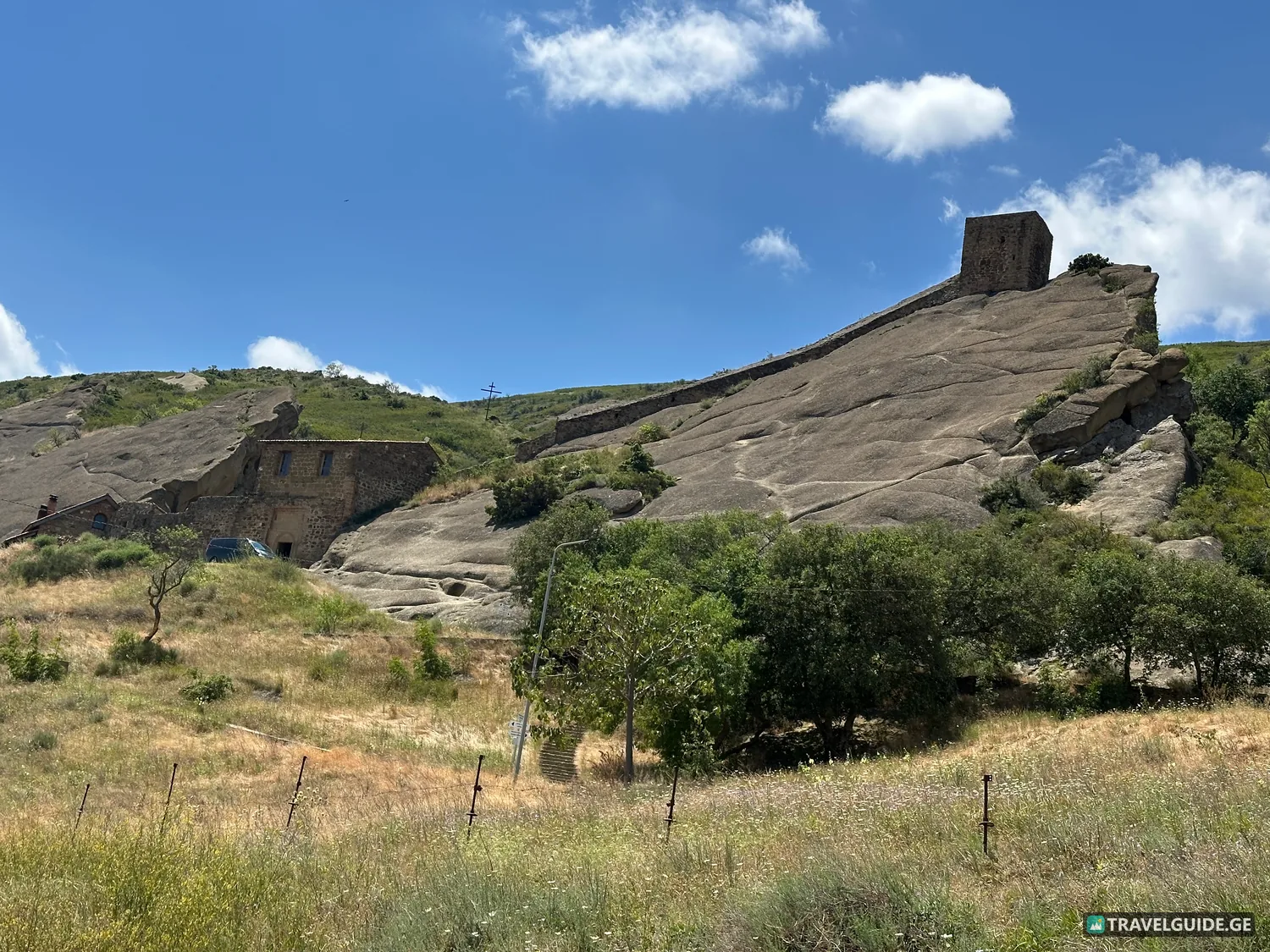
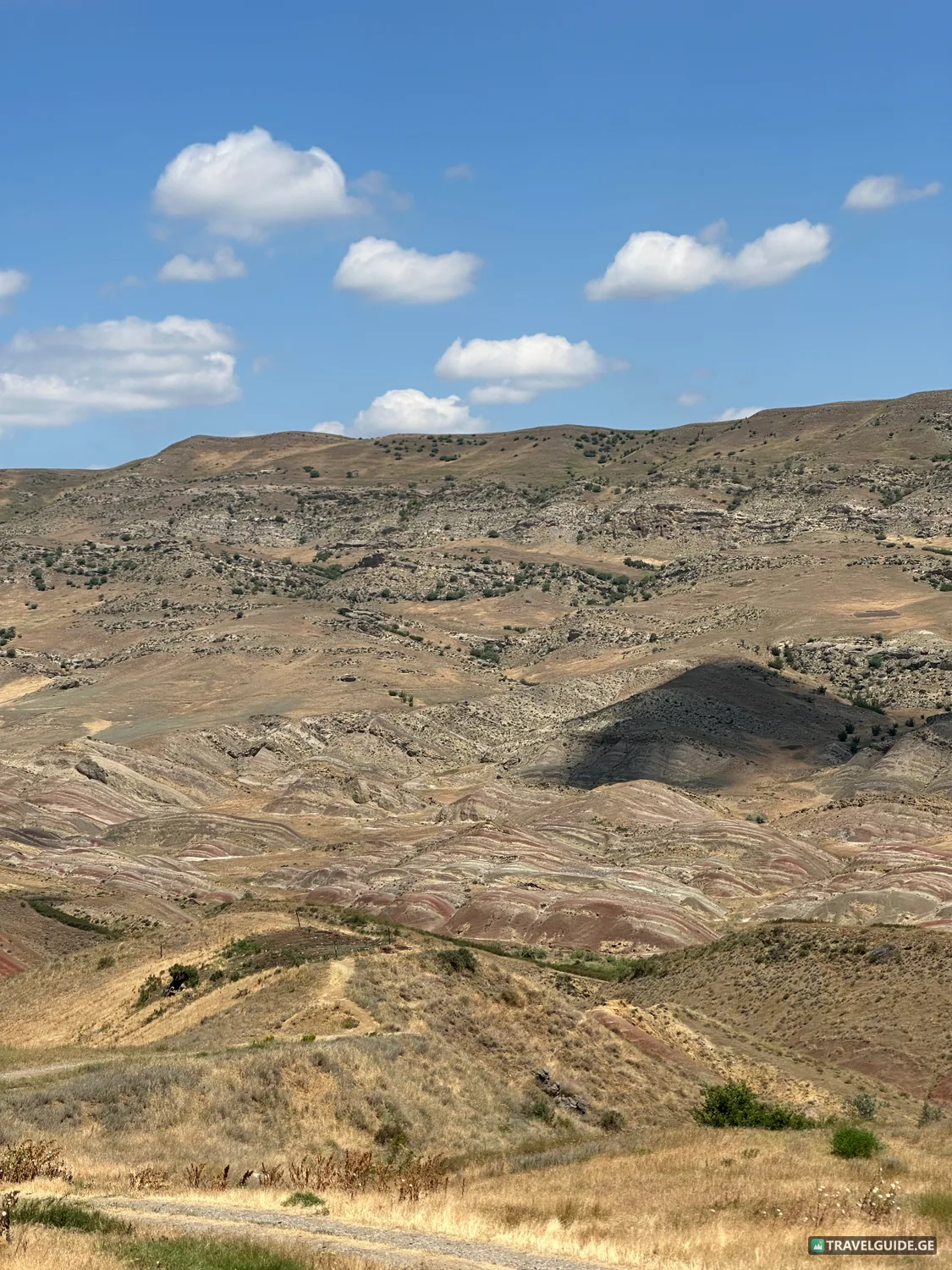
The Veran Gareji monastery complex sits within the rugged semi-desert of the Iori Plateau, a landscape defined by sharp ridges and deep canyons in the Sagarejo municipality of Kakheti. While the more widely known David Gareji Lavra serves as the primary spiritual center of this region, Veran Gareji represents a distinct phase in the historical development of the Gareji desert monasteries. The site remains a quiet, stark indicator of the ascetic isolation practiced by medieval monks who sought seclusion in the vast, arid expanse between the Iori and Alazani river basins.
Historically, the Gareji region became a bastion of Georgian spiritual and artistic life starting in the 6th century. Veran Gareji, often identified by its singular, decaying structure, acts as a primary example of the transition from early cave-based dwellings to formalized, free-standing church architecture. The site’s location on a natural terrace allows for an expansive view of the surrounding Gareji desert, a territory that functioned for centuries as both a religious frontier and a buffer zone against shifting regional powers.
The Architecture of Asceticism
The central domed church at Veran Gareji is the primary remnant of a once-thriving monastic community. Constructed likely between the 8th and 10th centuries, the church showcases the evolution of masonry techniques in eastern Georgia. Unlike the fully rock-hewn chapels found deeper within the Gareji caves, this structure is built from locally sourced, golden-hued sandstone, assembled with a lime mortar that has proven remarkably durable against the extreme diurnal temperature variations of the semi-desert environment.
- Structural Composition: The church follows a traditional central-domed layout. While the dome itself has suffered significant structural collapse, the base remains intact, showcasing the transition between the squinches and the circular drum.
- Masonry Techniques: The walls utilize a mix of hewn stone and rubble, typical of provincial Kakhetian ecclesiastical architecture from the early Middle Ages.
- Interior Remains: Though centuries of exposure to wind and erosion have largely removed the plaster layers, faint traces of frescoes suggest a once-vibrant interior program designed to facilitate the contemplative prayers of the resident monks.
Historical Evolution of the Gareji Desert
The development of monastic life in the Gareji desert was not a singular event but a multi-century expansion. The Veran Gareji site is part of a wider network of satellite monasteries that supported the primary centers of worship. These smaller outposts were essential for the laura system—a monastic life characterized by a central community surrounded by individual cells or smaller, semi-autonomous chapels.
During the peak of the Gareji monasteries, these sites were critical nodes in the transmission of literacy and illuminated manuscript traditions. Veran Gareji would have functioned as an agricultural and logistical support hub, managing the limited water resources of the Iori Plateau and providing a quiet space for monks dedicated to silence and scriptural study. The decline of the site is generally attributed to the recurring invasions that devastated the Kakheti region during the 13th through 17th centuries, which eventually forced the abandonment of many isolated desert outposts.