
Napareuli St. George Church
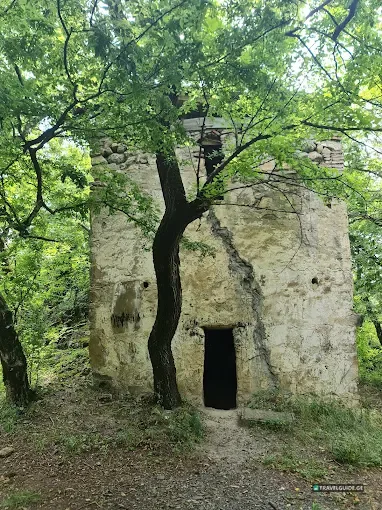
The Napareuli St. George Church stands as a quiet monumental piece of medieval history in the Kakheti region, settled within the inner borders of the Alazani Valley. While most travelers pass through this area specifically to explore its world-famous viticulture and historic winemaking estates, this local church offers a direct window into the classic village architecture and spiritual life of eastern Georgia. Built using indigenous materials that integrate with the surrounding rural landscape, the building represents the resilient parish design that guarded community identity through centuries of regional conflict.
Historical Evolution and Borderland Defenses
Constructed primarily during the late medieval era, the Napareuli St. George Church reflects a period when regional safety heavily influenced ecclesiastical architecture. The historical province of Kakheti faced frequent incursions from neighboring empires and East Caucasian highlanders, requiring rural structures to serve secondary roles as defensive refuges.
The masonry of the church utilizes thick, heavy fieldstones gathered from the nearby riverbeds of the Alazani basin, reinforced at the corners and structural arches with local flat bricks. This mixed building technique provided exceptional durability against seismic activity and deliberate structural damage. Over the generations, local communities executed several minor restorations, rebuilding damaged vaulted ceilings and reinforcing the foundations while carefully maintaining the original spatial layout and austere inner design.
Structural Layout and Kakhetian Brickwork
The building follows a simplified single-nave hall design, which was highly favored in rural Georgian communities due to its structural efficiency and acoustic clarity. The exterior walls are characterized by minimal ornamentation, letting the natural textures of rough-cut stone and red clay bricks define its visual identity. Small, narrow window slits pierce the massive walls, a design specifically intended to limit structural vulnerabilities during periods of warfare while creating a focused, dramatic lighting scheme inside.
Inside the sanctuary, the stone surfaces show the natural wear of centuries of liturgical candles and incense. The altar section remains partitioned according to traditional Orthodox canons, keeping a humble yet solemn atmosphere that focuses entirely on quiet reflection, away from the typical patterns of high-density tourism routes.