
Mudurbani Peak
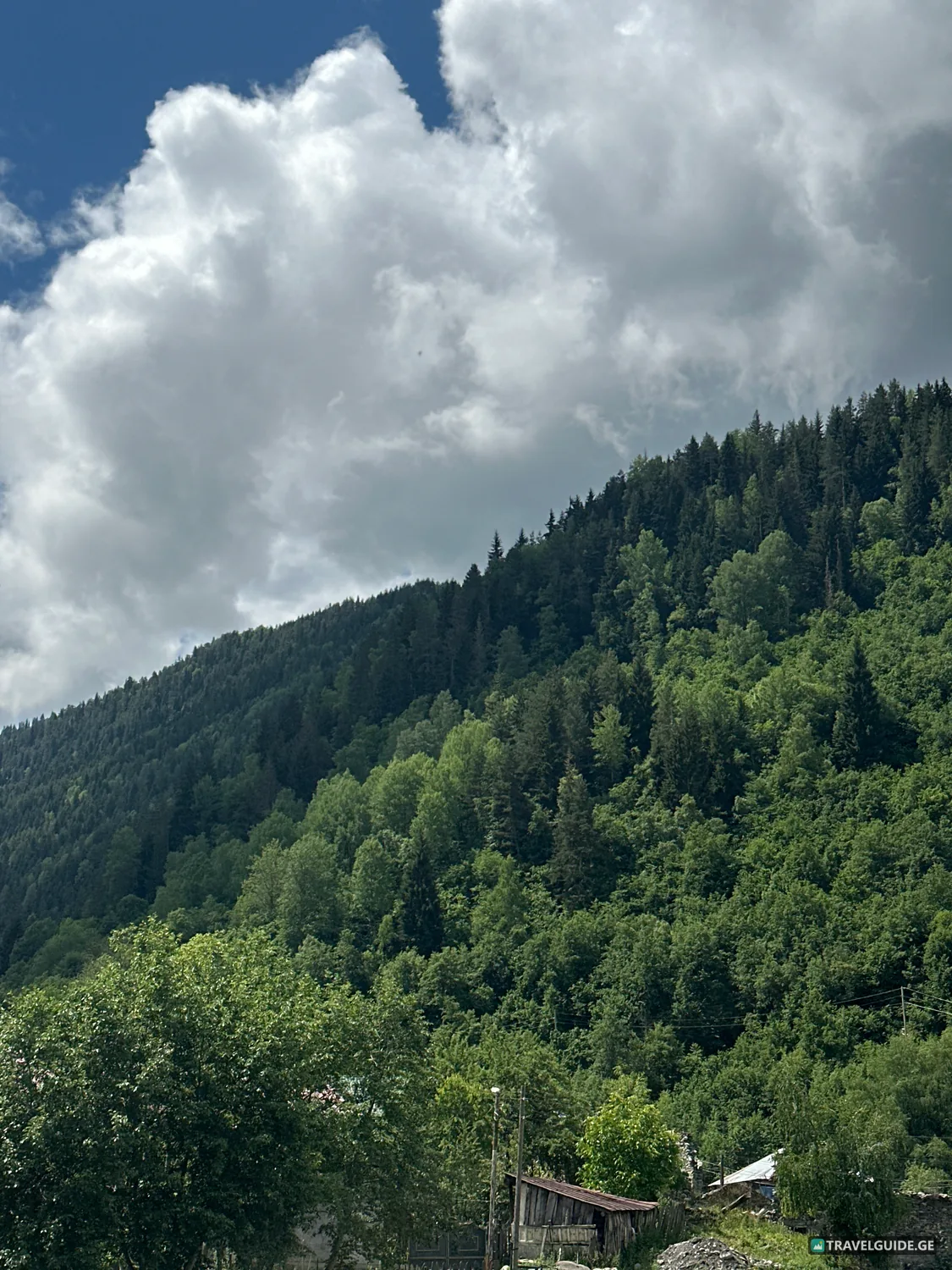
Mudurbani is a striking topographical feature in the high-altitude terrain of Upper Svaneti. Positioned prominently in the central Caucasus Mountains, this rugged peak is defined by sharp elevation gradients and severe alpine environments. Situated far above the regional treeline, the topography presents a relentless succession of sheer rock faces, glacial moraines, and high-altitude pastures. The mountain represents a raw, unyielding geological formation carved by centuries of glacial retreat and severe weather patterns, functioning as a silent witness to the tectonic forces shaping the Eurasian continent.
Geological Composition and Glacial Influence
The structural foundation of Mudurbani consists primarily of crystalline schists and ancient granitic intrusions, characteristic of the Greater Caucasus uplift. Over millennia, continuous freeze-thaw cycles and the mechanical weathering of glacial ice have fragmented the uppermost ridges, resulting in extensive scree slopes at the base of the peak.
These geological processes are actively ongoing. Small, unnamed hanging glaciers cling to the northern aspects of the mountain, feeding seasonal meltwater streams that eventually join the broader Enguri River basin. This constant erosion ensures that the mountain's face remains jagged and continually evolving.
Flora and Fauna of the Alpine Zone
Vegetation around Mudurbani is strictly limited to hardy alpine and subalpine species. Above 2,500 meters, the landscape is dominated by low-lying Caucasian rhododendrons and specialized lichens that cling to exposed rock faces.
- Caucasian Tur (Capra caucasica): An agile mountain goat endemic to the region, navigating the vertical terrain with ease.
- Avian Predators: Golden eagles and bearded vultures (lammergeiers) frequently utilize the thermal updrafts around the summit to survey the valleys below.
- Endemic Flora: Rare alpine bellflowers and specialized mosses that survive prolonged snow cover.
Etymology and Svan Folklore
The name Mudurbani is rooted in the unwritten, highly complex Svan language, an ancient Kartvelian linguistic offshoot. While the exact translation is obscure, local oral traditions suggest a connection to terms describing inaccessible heights or protective barriers.
In the broader context of Svan folklore, peaks like Mudurbani were historically revered as the domain of Dali, the pre-Christian goddess of the hunt. Hunters from nearby settlements approached these heights with deep reverence, observing strict rituals to appease the mountain spirits before tracking game across the treacherous slopes.