
Gergeti Trinity Church
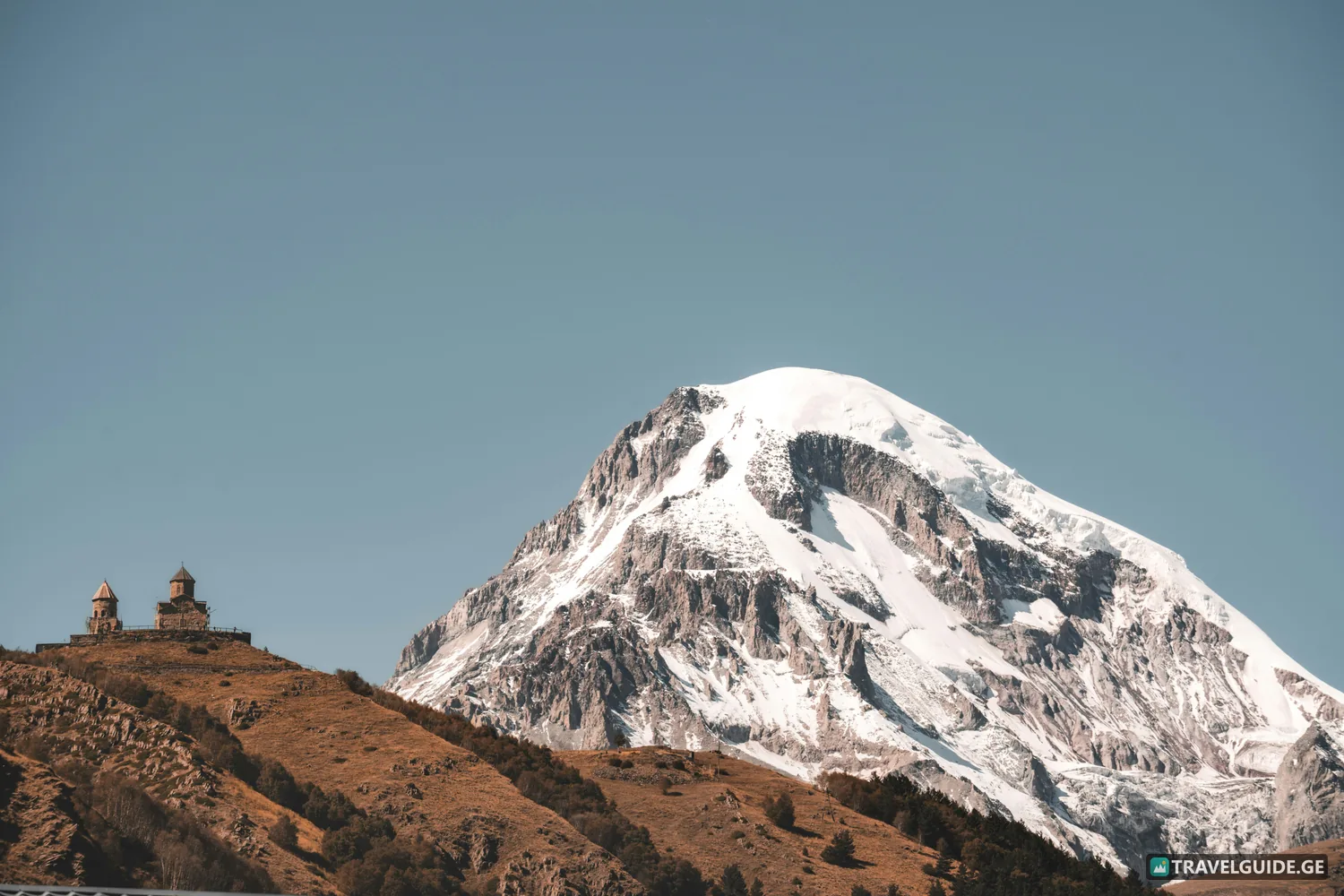
Standing at an elevation of 2,170 meters above sea level, Gergeti Trinity Church is the definitive architectural symbol of Georgia, positioned dramatically against the sharp, volcanic cone of Mount Kazbegi. Constructed in the 14th century, this stone complex represents a remarkable feat of medieval alpine engineering. Unlike the grand urban cathedrals of Mtskheta or Tbilisi, this sanctuary derives its power from isolation, braving the intense elements of the Greater Caucasus range while acting as a silent sentinel over the Terek River valley and the historic settlement of Stepantsminda below.
The Medieval Stronghold of Khevi
The construction of Gergeti Trinity Church (locally known as Gergetis Sameba) during the 1300s aligns with a period of strategic fortification in the northeastern highland provinces of Georgia. Built in the historical region of Khevi, the church served a dual purpose as a spiritual sanctuary and a defensive watchtower. The complex consists of a cross-domed temple, a separate two-tier bell tower, and a sturdy stone defensive wall that encloses the perimeter.
The masonry uses large blocks of locally quarried andesite stone, carefully chiseled to interlock tightly without heavy mortar, allowing the structure to absorb the seismic shifts common to this volcanic mountain zone. The exterior facade features subtle medieval bas-reliefs, including stylized chain links, crosses, and mythical creatures carved around the narrow window openings, showcasing the distinct artistic traditions of highland Georgian builders.
The Guardian of Georgia's Relics
Beyond its architectural significance, the monastery held a position of profound trust in the medieval kingdom. Due to its extreme isolation and near-impregnable geographic position, Gergeti became the ultimate treasury for the state during times of foreign invasion. When Persian, Ottoman, or Mongol armies threatened the lowlands and occupied the capital of Tbilisi, the realm's most sacred relics were transported up the military path into the high mountains for safekeeping.
Among the historical treasures hidden here was the legendary Grapevine Cross of Saint Nino, the sacred relic wrapped in the saint's own hair that symbolizes the Christianization of Georgia in the 4th century. The responsibility of protecting these artifacts fell upon the free mountaineers of Khevi, who guarded the mountain passes with absolute authority.
Architecture and Spiritual Atmosphere
Inside the main hall, the environment reflects the austere lifestyle of the medieval highland monks. The interior walls are dark, covered with a layer of ancient soot from centuries of burning beeswax candles and incense. Unlike lowland churches that feature expansive, vibrant frescoes, the walls here are largely unadorned, emphasizing the heavy, gray structural stone.
The space is illuminated only by thin shafts of natural light piercing through the narrow slits in the high dome. A traditional iconostasis separates the main nave from the altar, displaying revered regional icons painted in dark, solemn tones. The adjacent bell tower, built during the same century, retains its original structural integrity and provides an acoustic focal point for the surrounding alpine meadows during monastic services.