
Arsha Waterfall
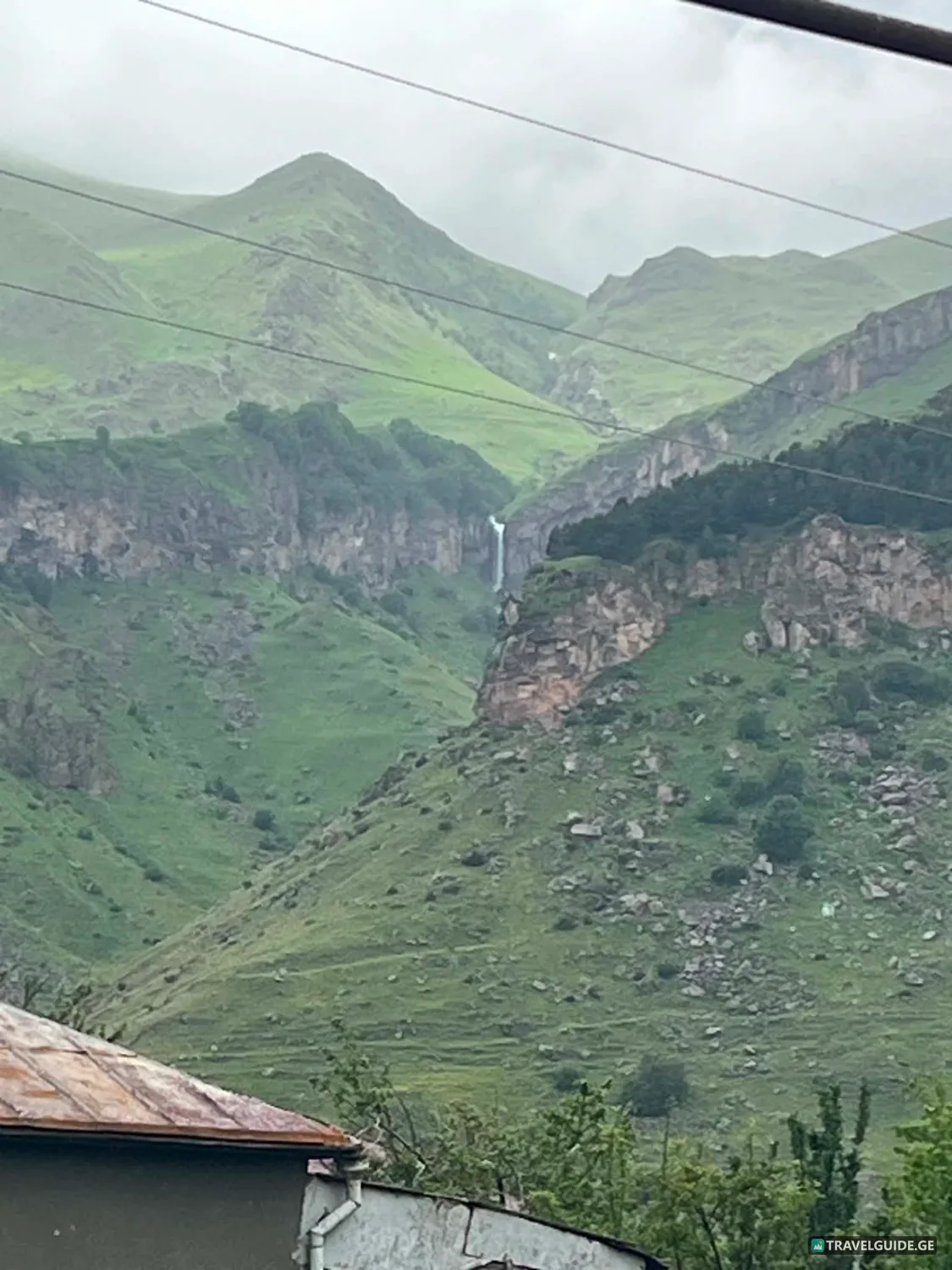
Located in the Stepantsminda municipality of Georgia, the Arsha Waterfall, historically and locally identified as Didi Chanchkeri, emerges from the rugged northern slopes of the Greater Caucasus. Positioned above the village of Arsha, this natural formation serves as a significant drainage point for the glacial systems characterizing the Shani massif. Unlike the more accessible sites within the Tergi River valley, this location remains a quintessential example of the high-altitude hydrology that defines the eastern portion of the Kazbegi district.
Geological Origins of the Shani Massif
The waterfall is sustained by perennial snowfields and glacial melt emanating from the Mount Shani peaks, which rise to over 4,400 meters. The geological structure here is composed primarily of Jurassic period sedimentary rock, specifically alternating layers of shale and limestone. Over millennia, the relentless force of glacial runoff has carved a distinct vertical channel into the mountain face, creating a tiered descent that accelerates as it approaches the lower basin. This erosive process continues to shape the cliffside, evidenced by the frequent deposit of scree and rocky debris at the base of the primary flow.
Hydrological Significance and Flow Patterns
The discharge of Didi Chanchkeri is highly seasonal, dictated by the thermal shifts in the Caucasus high-mountain climate. During the nival regime—typically spanning from late May through early August—the waterfall reaches maximum velocity. The volume of water is substantial enough to produce a consistent aerosolized mist, which alters the micro-climate immediately surrounding the basin. This moisture supports a specialized ecosystem of bryophytes (mosses) and saxicolous flora that cling to the damp rock faces, creating a stark contrast to the surrounding sub-alpine meadow grasses.
Cultural Context and Defensive Architecture
The surrounding landscape is deeply intertwined with the medieval history of the Dariali Gorge. The village of Arsha itself served as a strategic outpost for controlling the movement of goods and people through the narrow corridor connecting the southern and northern slopes of the Caucasus. Near the approach to the waterfall, the remnants of the Arsha Tower stand as a functional sentinel. Constructed during the late medieval period, this structure utilized local stone masonry to monitor the Tergi valley, reflecting a time when survival in the highland required constant vigilance against incursions and environmental hazards.